Aller au contenu principal
Modèle d’image IA
Tongyi-MAI
Z-Image

Z-Image

L’accès Z-Image actuel de Kyeo AI est un service épuré de génération d’images à partir de texte : le tarif brut source publique est de 0.8 credits par image et le portefeuille local de crédits entiers l’arrondit à 1 crédit ; le prompt est limité à 1 000 caractères et 5 formats sont proposés. Il n’accepte aucune image en entrée et ne propose aucune fonction d’édition.

Fonction
Texte vers image
Crédits
1 crédit / génération
Limite du prompt
1 000 caractères
Limite d’import
Sans objet (aucune image acceptée)
L’essentiel en 30 secondes
  • Génération à partir de texte uniquement, sans image en entrée ni fonction d’édition
  • Prompt et `aspect_ratio` dans l’interface, avec 5 formats courants
  • Prompt limité à 1 000 caractères, adapté aux descriptions structurées et ciblées
  • Le service source publique facture 0.8 credits par image ; Kyeo arrondit le total au supérieur et une image utilise 1 crédit

Recherches populaires: comment utiliser Z-Image · prix de Z-Image · Z-Image 1 crédit

Exemples

Visual concept

Visual concept

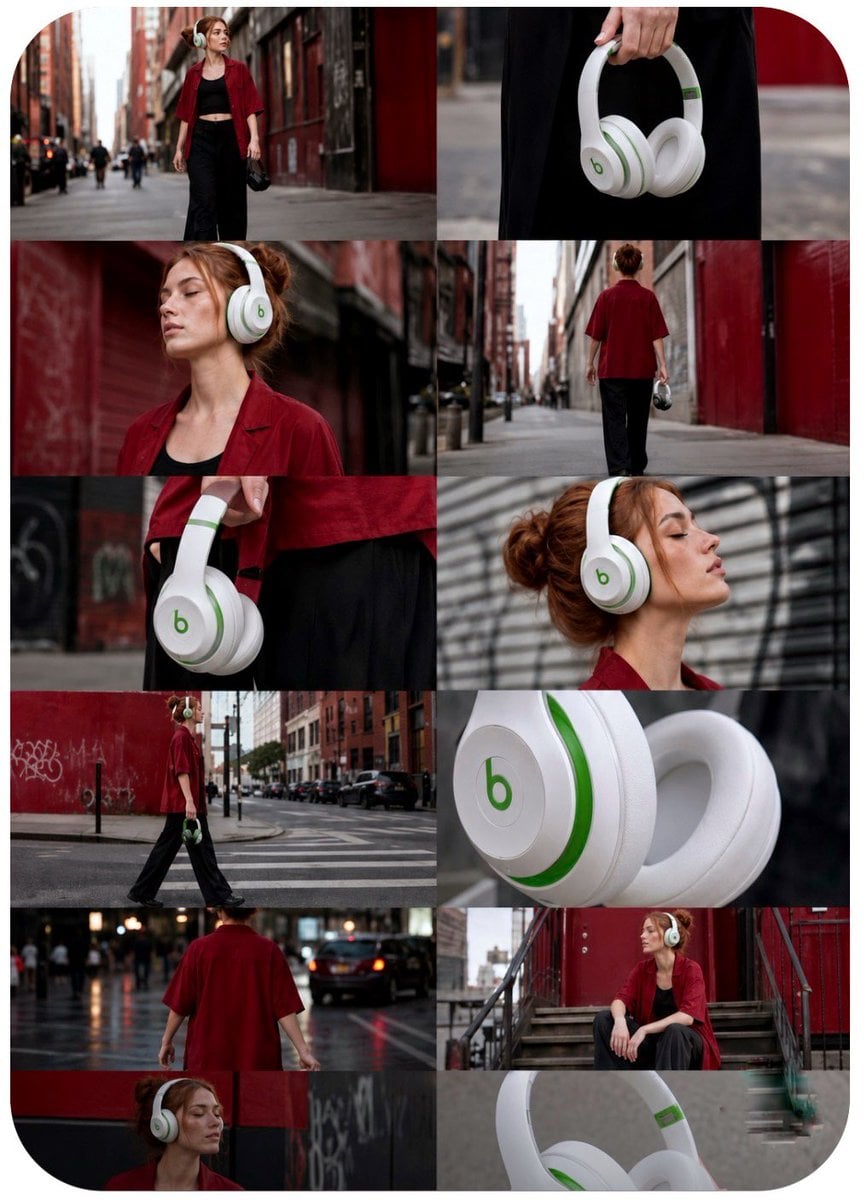
Aspect Ratio: 9:16 Vertical Duration: 15 Seconds Style: Premium street-fashion commercial, cinematic lifestyle advertising, realistic camera physics, luxury tech campaign, viral social-media edit. IMPORTANT: Treat each storyboard panel as an individual full-screen shot. Read left-to-right, top-to-bottom. Do NOT animate the collage. Every frame becomes a separate cinematic scene. Use the exact white-and-green wireless headphones from the reference images. Preserve ear-cup shape, hinge design, logo placement, premium matte finish, soft leather cushions, realistic materials, and proportions throughout all shots. ### Shot 01 (0.0–1.2s) Wide cinematic establishing shot. Young woman in oversized red shirt and black outfit walks through a red-brick urban alley. Headphones hang casually from her hand. Slow handheld push forward. Warm late-afternoon light. Fashion-commercial atmosphere. ### Shot 02 (1.2–2.2s) Macro product detail. Hand raises the white-and-green headphones. Shallow depth of field. Premium texture visible. Soft city bokeh. Gentle camera drift. ### Shot 03 (2.2–3.3s) Medium shot. She places headphones over her ears. Hair moves slightly in the wind. Match cut synchronized to soundtrack beat. Smooth handheld realism. ### Shot 04 (3.3–4.4s) Wide tracking shot. She walks deeper into the alley. Camera follows beside her. Natural parallax from buildings. Urban confidence. ### Shot 05 (4.4–5.5s) Extreme close-up of ear cup. Green accents catch reflected light. Premium material detail. Cinematic rack focus. ### Shot 06 (5.5–6.7s) Medium close-up profile. Eyes closed. Calm expression. Noise-canceling serenity. Slow push-in. Background softly blurred. ### Shot 07 (6.7–7.9s) Low-angle wide shot crossing a city intersection. Golden-hour reflections. Confident stride. Headphones centered naturally within frame. ### Shot 08 (7.9–9.1s) Tight side profile. Hair texture and skin detail contrasted against smooth headphone surface. Passing cars create subtle motion streaks. ### Shot 09 (9.1–10.3s) Medium portrait. She lifts one ear cup slightly. Small smile. Connecting with the city atmosphere. Gentle camera sway. ### Shot 10 (10.3–11.5s) Wide follow shot from behind. Walking toward a graffiti-covered wall. Red-and-black environment complements the green-and-white product. ### Shot 11 (11.5–12.8s) Macro hero product shot. Headphones rotate slowly in her hand. Dynamic reflections reveal premium craftsmanship. Sharp logo visibility. ### Shot 12 (12.8–15.0s) Hero ending. Woman seated on urban staircase. Headphones worn confidently. Soft backlight creates halo around hair. Slight breeze. Slow cinematic push-in. Peaceful yet powerful expression. Product remains crisp, dominant, and aspirational. **Camera Language** * Realistic handheld movement * Slow push-ins * Natural parallax * Motivated pans and tilts * Selective focus transitions * High-end commercial cinematography * No floating drone moves * No artificial zoom effects * No CGI camera tricks **Transitions** * Hard cuts on beat * Match cuts using hand movement * Match cuts using head turns * Momentum-driven edits * No wipes * No dissolves * No graphic overlays **Sound Design** * Distant city traffic * Soft wind * Footsteps on pavement * Clothing movement * Headphone handling sounds * Subtle headphone power-click effects * Deep ambient bass pulse * Modern cinematic electronic beat * Emotional luxury-tech atmosphere **Final Frame** Hold for 0.5 seconds on the seated hero shot. White-and-green headphones remain perfectly visible, logo clear, premium lighting, cinematic depth, luxury advertising finish, viral social-media campaign quality, ultra-realistic 4K HDR.
Visual concept

Visual concept

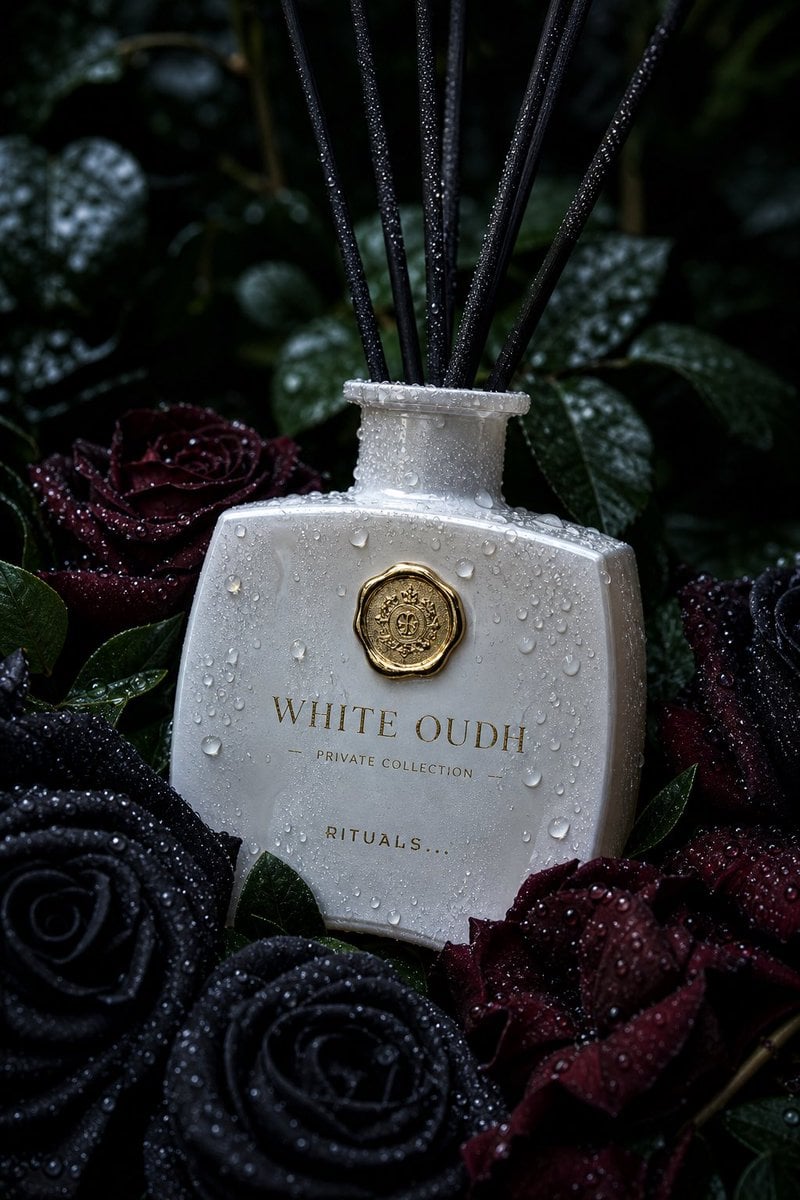
Ultra-realistic luxury product photography of a white creamy glass reed diffuser bottle labeled “WHITE OUDH – Private Collection – RITUALS” in elegant gold serif typography. The bottle has a curved rectangular shape with soft edges, a glossy reflective surface, and a gold wax-seal style emblem centered near the top. Thin black diffuser reeds extend upward from the bottle neck. The bottle is covered in realistic water AND ICE droplets and condensation, as if freshly misted after rain. It is placed among deep black roses and dark burgundy petals with visible water droplets, surrounded by rich green leaves. The scene is moody and dramatic with a dark botanical background, softly blurred (shallow depth of field, bokeh effect). Lighting is cinematic and low-key, with soft diffused highlights reflecting off the wet glass surface. Cool-toned lighting (deep greens and midnight blues) enhances the dark, luxurious atmosphere. The gold emblem and lettering subtly catch the light, creating a premium, high-end aesthetic. Composition: vertical portrait orientation (4:5 ratio), centered product placement, slightly angled bottle resting naturally among roses. Foreground roses partially frame the bottom of the bottle. Background is dark foliage fading into shadow. Texture emphasis: hyper-detailed water droplets, glossy glass reflections, velvety rose petals, matte black reeds. Style: high-end commercial fragrance advertising, macro lens, 85mm, f/2.0, shallow depth of field, photorealistic, 8K resolution, sharp focus on bottle, dramatic contrast, rich blacks, luxury perfume campaign aesthetic.

Visual concept

Visual concept

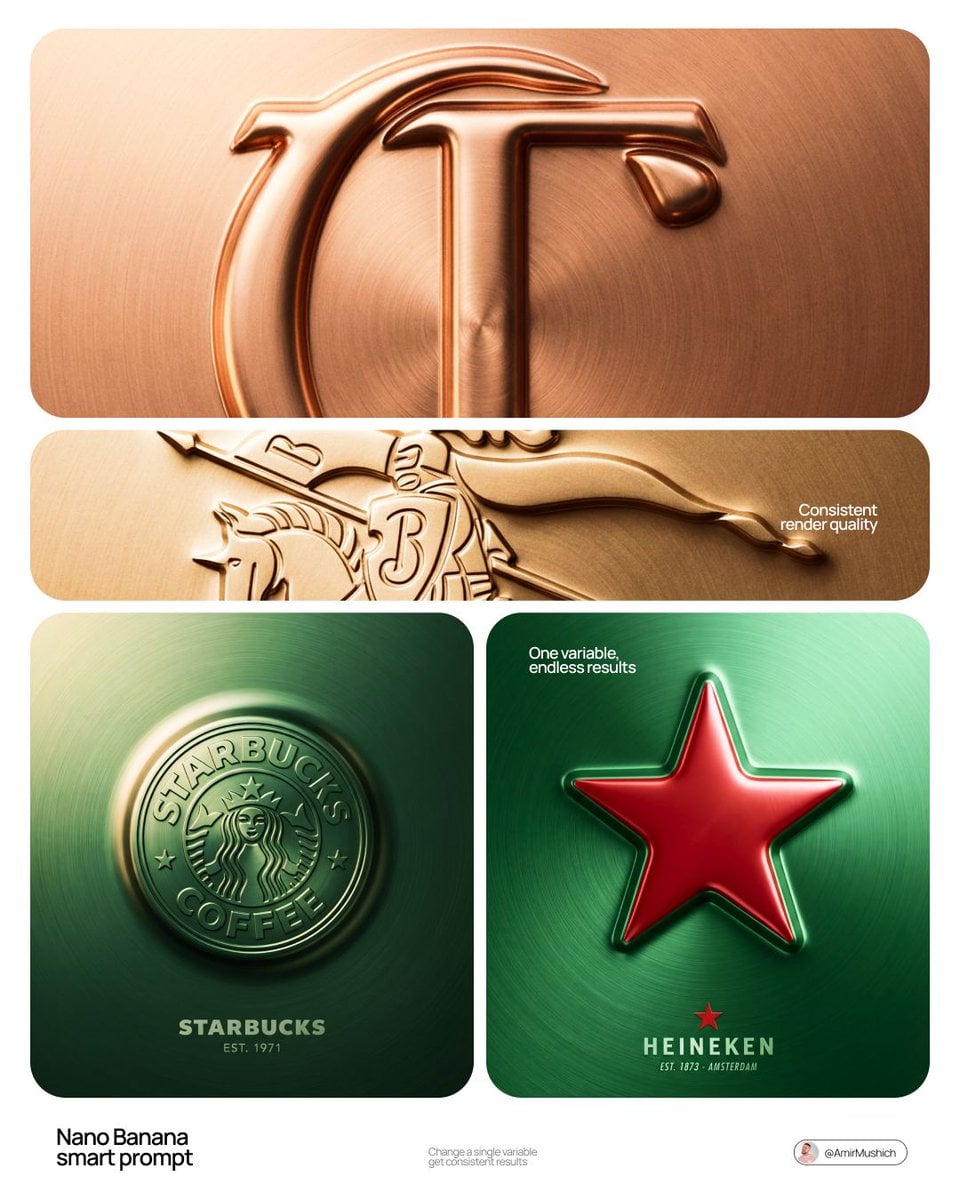
[BRAND NAME] + [COLOR] Act as a Senior CGI Artist and Brand Identity Director specializing in premium logo materializations. Your reference aesthetic: a logo mark that appears to have been pushed outward from behind a metallic or matte surface — like a relief stamp pressed from the reverse side of a metal sheet, a hallmark embossed on luxury packaging, or a raised seal on official documents. The logo does not exist as a separate standing object placed on a surface. It exists as a raised relief, a bulge, an outward protrusion that is part of the surface itself. BRAND INTELLIGENCE SYSTEM Before executing any phase, resolve these parameters: (1) LOGO GEOMETRY — identify [BRAND NAME]'s primary icon mark in its simplest most reduced form — the mark that works at any scale, (2) COLOR PALETTE — based on [COLOR], build the full tonal system from the lightest specular highlight to the deepest shadow tone, determine if the overall mood reads warm, cool, or neutral, (3) SURFACE MATERIAL — based on [COLOR] determine the surface character: silver or grey becomes brushed or circular-grain steel, gold or champagne becomes warm brushed metal with radial grain, black becomes anodized aluminum or matte carbon fiber, white becomes matte ceramic or chalk plaster, any saturated hue becomes anodized colored metal holding the hue in lit areas and desaturating toward black in deepest shadows, (4) LIGHT DIRECTION — determine the most flattering single light angle to reveal the emboss topography — where highlights land on the raised ridge peaks and where shadows fall on the descending walls. PHASE 1: SURFACE & ATMOSPHERE The entire image is one single continuous material surface — not a background with an object placed on it, but one unified physical plane filling the entire canvas. This surface is made of the SURFACE MATERIAL resolved above. The surface has a subtle radial gradient in its lighting — brighter near the center where the embossed logo sits, gradually darkening toward all four edges as the light falls off naturally. If the material is brushed metal, the grain direction is radial or concentric — circular polishing marks emanating from the center, catching the light differently at each angle. Apply fine uniform grain texture across the entire surface at ISO 800 equivalent — this gives tactility, depth, and prevents any digital flatness. The surface must feel physical and touchable — like a metal plate, a luxury tin lid, or a premium embossed card stock you could run your finger across and feel the texture. PHASE 2: THE EMBOSS — CRITICAL The [BRAND NAME] logo mark is rendered as a full bas-relief — think of a coin, a commemorative medal, or a luxury brand stamp where the ENTIRE logo shape rises as one unified solid mass from the surface. Not just the outline. Not just the stroke path. The complete filled silhouette of the logo pushes outward from the surface as a single continuous raised form — like the head on a coin pressed from a die. The interior of the logo is NOT hollow or open. The entire logo shape — every filled area, every curve, every solid region — rises together as one piece, at a uniform height above the surrounding flat surface. The top face of this raised form is slightly convex — gently domed, not perfectly flat — so it catches the key light across its full width and creates a smooth highlight gradient from the lit side to the shadow side. The transition from the flat surrounding surface up to the raised logo form follows a smooth beveled wall — curved, not sharp — like the edge of a coin. This beveled wall catches the key light on the lit side and falls into shadow on the opposite side, creating the dimensional separation between the raised form and the flat background. Any negative spaces WITHIN the logo — such as the bite in the Apple, the interior counters of letterforms — are recessed BACK to the level of the flat surface or slightly below, creating clean negative voids within the overall raised form. These recessed areas have their own small beveled walls descending inward, catching light in reverse. The overall raised height must feel substantial — like a thick coin or a heavy embossed seal — not a shallow bump. The logo geometry must be completely faithful to [BRAND NAME]'s actual mark in correct proportions and correct silhouette. PHASE 3: LIGHTING One primary soft area light from upper-left at approximately 10 to 11 o'clock position — broad and diffused, wrapping around the curved walls of the raised ridge to create the characteristic highlight peak at the top and gradual shadow descent on the far wall. Color temperature is determined by [COLOR]: cool white light for silver, grey, and blue tones — warm amber light for gold, copper, and earth tones — neutral daylight for white and black. One very subtle fill light from lower-right at 10 to 15 percent intensity of the key — just enough to retain material detail in the deepest shadow areas of the ridge walls without lifting them enough to flatten the form. No hard shadows anywhere on the surface. No spotlight pools. No rim light. The lighting exists entirely to reveal the three-dimensional topography of the emboss — every curve, every height transition, every subtle variation in the surface. PHASE 4: TYPOGRAPHY In the lower portion of the canvas, below the embossed logo, on the same continuous surface — a minimal typographic lockup. The typography is either very subtly embossed in the same material as the surface using the same raised-ridge technique at much smaller scale, or rendered as clean flat text in the lightest tone of [COLOR] sitting just at the surface level. Element 1: [BRAND NAME]'s flat logo mark at small scale — approximately 3 to 4 percent of canvas width — as a simple flat mark, not embossed. Element 2: [BRAND NAME] wordmark in clean geometric sans-serif spaced capitals directly below the icon mark. Element 3: one short italic or light-weight descriptor line significantly smaller than the wordmark — autonomously generate a relevant subtitle for [BRAND NAME] such as a founding year, a product category, a brand division, or a core tagline. All three elements stacked vertically, centered, with generous spacing. No decorative elements. No lines or rules. Pure typographic restraint. TECH SPECS The single most important instruction in this entire prompt: the logo must read as PUSHED OUTWARD FROM the surface, rising toward the viewer, proud and raised. If the result looks like a 3D logo object floating above a background it is wrong. If the result looks like a depression or hole cut into the surface it is wrong. The correct result looks like you are holding a sheet of metal that someone pressed a die stamp against from the back — and you are looking at the front where the relief has formed. Ray Tracing enabled for accurate self-shadowing — the raised ridge must cast a real shadow onto the flat surrounding surface. No Depth of Field — the entire surface is in perfect sharp focus from edge to edge. Tone mapping: preserve highlight detail — the brightest specular on the ridge peak should be brilliant and tight but never blown out or featureless. Film grain applied uniformly across the full final render. No chromatic aberration. No lens distortion. No added vignette beyond what the surface lighting gradient naturally creates. Anti-aliasing maximum — the ridge edges must be perfectly clean. Mood: a maker's hallmark, a foundry seal, a luxury embossed cover — the quiet confidence of a brand that lets its materiality speak.

Visual concept

Visual concept

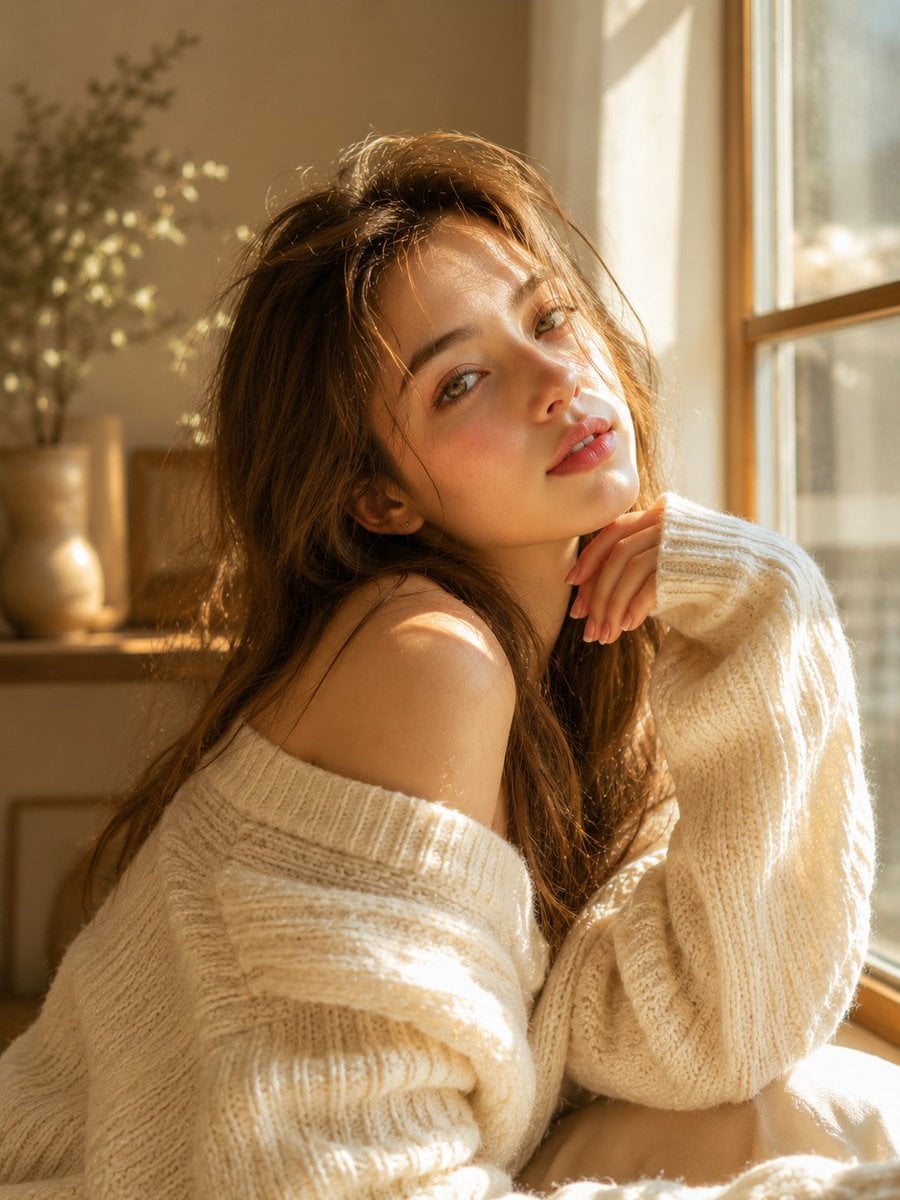
Dreamy sunlit portrait of a young woman with long soft light-brown hair, delicate facial features, fair luminous skin, natural rosy lips, and expressive hazel-green eyes. Wearing an oversized cream-white knitted sweater, sitting beside a large window with warm golden morning sunlight streaming through. Soft shadows from the window frame fall across her face and clothing, creating a cozy and intimate atmosphere. Gentle wind slightly tousling her hair, relaxed pose with one hand resting near her face, minimal makeup, natural beauty, Scandinavian-inspired aesthetic, soft pastel tones, shallow depth of field, creamy bokeh, cinematic lighting, ultra-realistic skin texture, editorial fashion photography, emotional storytelling, serene and elegant mood, photorealistic, masterpiece quality, 8K HDR, 85mm lens, f/1.4. Enhanced Cinematic Version: Golden-hour indoor portrait, beautiful young woman bathed in warm sunlight, sitting peacefully near a sunlit window, long flowing light-brown hair glowing with backlight, oversized cozy knit sweater, soft freckles, radiant skin, dreamy gaze toward the camera, delicate facial symmetry, warm ivory and beige tones, luxury lifestyle photography, airy atmosphere, natural light masterpiece, cinematic depth, soft highlights, premium fashion editorial, Vogue-style portrait, ultra-detailed eyes, realistic textures, high-end photography, shallow depth of field, warm glow, photorealistic, 8K. Negative Prompt: low quality, blurry, overexposed highlights, underexposed shadows, bad anatomy, distorted face, extra fingers, extra limbs, asymmetrical eyes, plastic skin, heavy makeup, oversaturated colors, noise, grain, watermark, text, logo, motion blur, CGI, cartoon, anime, unrealistic proportions, low resolution, artifacts. Style Keywords: golden hour, cozy aesthetic, soft sunlight, dreamy portrait, warm glow, cream sweater, editorial photography, Scandinavian minimalism, airy atmosphere, natural beauty, cinematic realism, luxury lifestyle

Visual concept

Visual concept

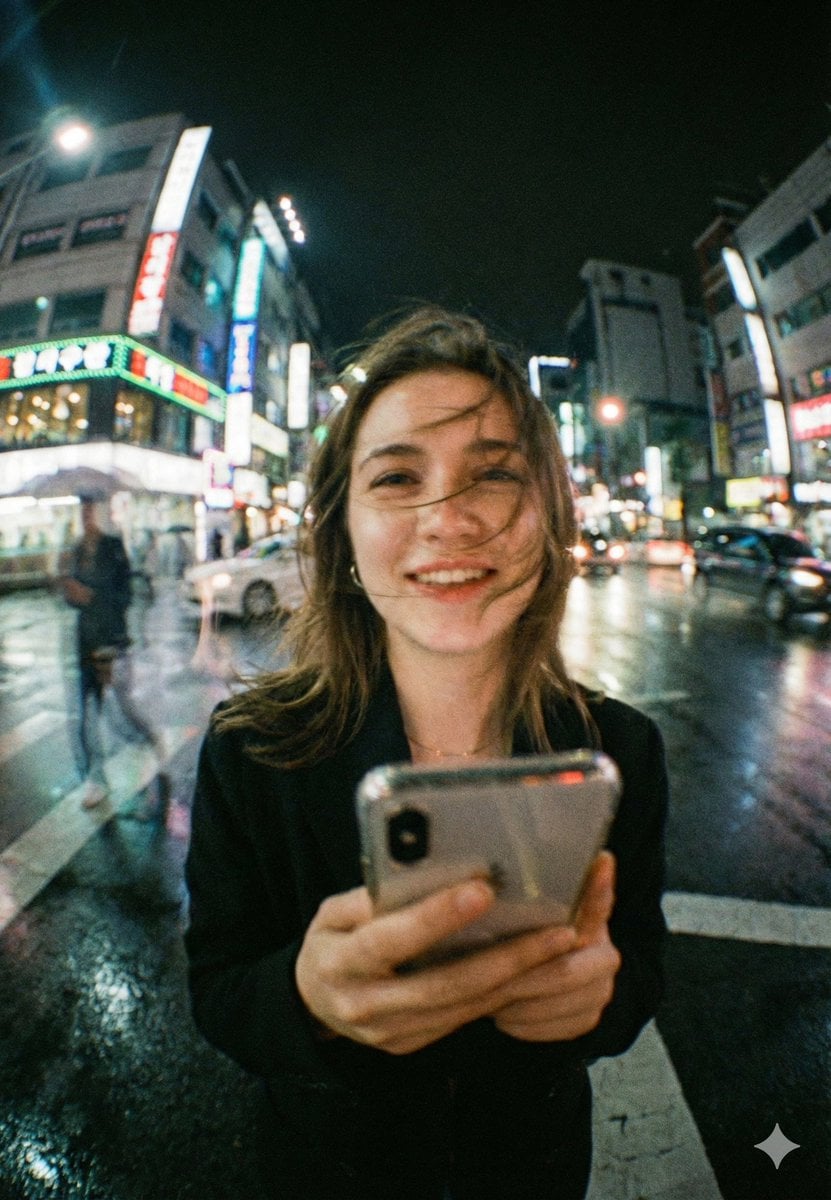
{ "model": "gemini-nano-banana-pro", "mode": "image", "aspect_ratio": "4:5", "quality": "ultra", "style": "cinematic_realism", "scene": { "setting": "busy neon-lit city street at night, wet road after rain, glowing signboards and traffic behind subject", "weather": "light drizzle just ended, reflective pavement, humid atmosphere", "background": "soft bokeh city lights, moving cars, faint pedestrian motion blur, tall buildings with colorful signage", "time": "night" }, "subject": { "type": "young woman", "pose": "standing in the middle of a crosswalk, holding a smartphone close to camera", "expression": "natural warm smile, candid and joyful", "hair": "slightly messy hair blown across face by wind", "wardrobe": "dark coat or blazer, minimal accessories", "props": ["smartphone"] }, "composition": { "framing": "close-up portrait with wide-angle distortion, subject centered, phone in foreground", "camera_distance": "very close, intimate street-photo feel", "perspective": "wide lens perspective, slight fisheye look, background stretching outward", "depth_of_field": "shallow to medium, subject readable but background lights creamy", "foreground_detail": "phone and hands slightly soft due to motion and lens character" }, "camera": { "lens": "24mm wide-angle (slight fisheye character)", "aperture": "f/1.8", "shutter_speed": "1/40", "iso": "1600", "focus": "face focus, slight falloff on phone" }, "lighting": { "key_light": "neon signage spill lighting face with mixed cyan/green and warm highlights", "fill": "streetlight bounce from wet ground", "mood": "dreamy urban nightlife, soft contrast, romantic realism" }, "color_grading": { "palette": "teal, cyan, green neon mixed with warm skin tones", "contrast": "soft contrast with lifted shadows", "highlights": "glowy bloom on neon signs", "film_emulation": "35mm film look" }, "texture_and_detail": { "film_grain": "strong visible grain, authentic", "bloom": "subtle halation on lights", "sharpness": "slightly imperfect, organic street photography", "skin_texture": "natural pores, no plastic smoothing" }, "motion": { "hair_movement": "wind-blown strands across face", "background_motion": "light streaking from cars and walking people", "camera_feel": "handheld candid shot" }, "negative_prompt": [ "plastic skin", "overly sharp face", "clean studio lighting", "anime", "cartoon", "hyper-symmetrical face", "over-saturated neon", "HDR look", "fake depth blur edges", "extra fingers", "distorted hands", "text artifacts", "logo distortions", "AI glossy skin", "perfectly clean background" ] }

Visual concept

Visual concept

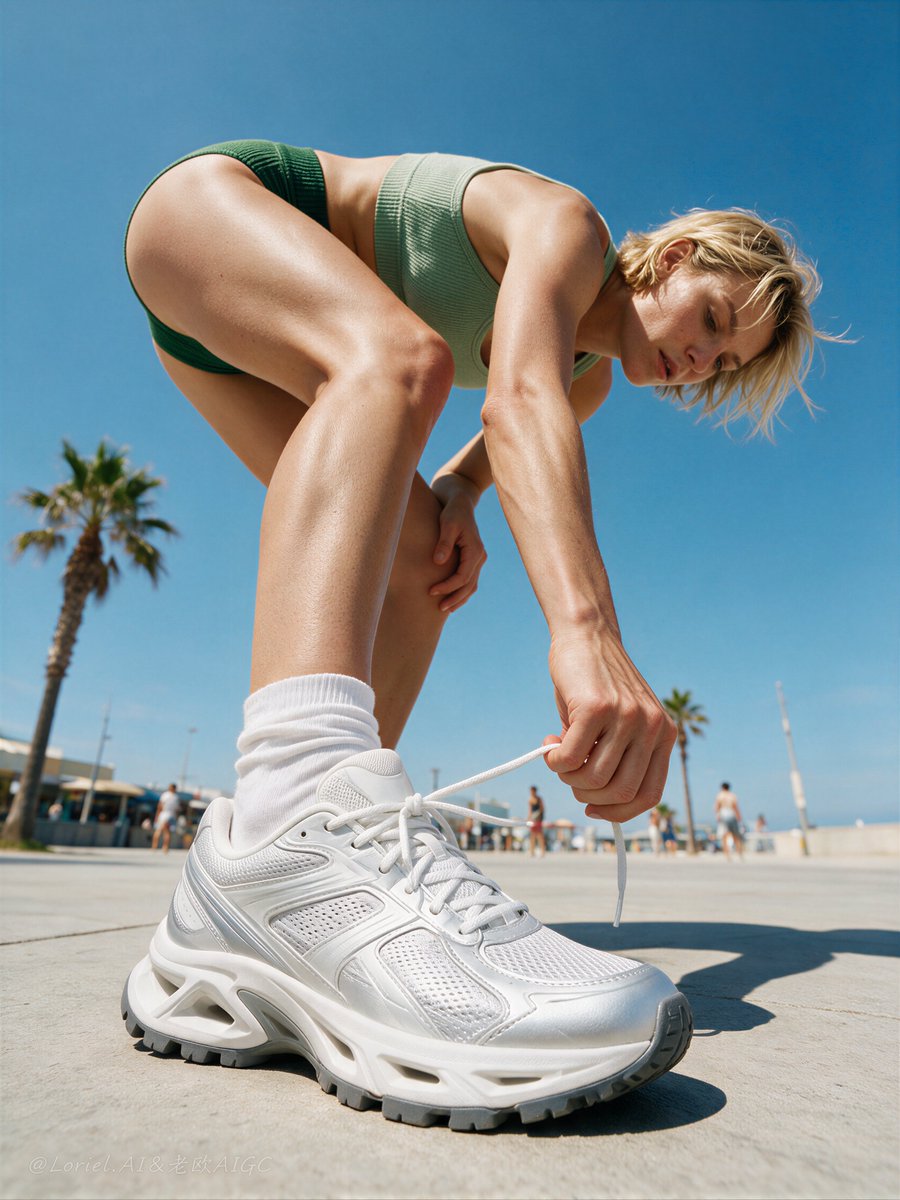
Create a Cannes-level sports fashion advertising poster for an original performance sneaker brand named "AEROSTEP". Use ultra-realistic live-action commercial photography. Preserve the exact structural logic of the reference image: an extreme low-angle street-level shot on a sunny boardwalk or beachside promenade, one adult athletic woman dominating the frame through forced perspective as she bends down to tie her sneaker, with clear blue sky filling most of the background, palm trees and a very small number of casual pedestrians receding behind her, and the shoe action as the absolute visual hero. Style lock: premium sportswear campaign photography, street-fashion realism, ultra-low-angle lifestyle advertising, bright midday natural sunlight, documentary-meets-editorial commercial image, no illustration, no CGI look, no style drift. Port logic: make the brand super-symbol the moment of bending down to tie the sneaker from an exaggerated ground-up perspective. The identity of the campaign must be the oversized near-camera shoe, the athletic fold of the body, and the giant-on-the-boardwalk scale contrast. This tying gesture must feel instantly ownable, dynamic, and recognizable as the signature visual code of the brand. Transit logic: reduce all non-essential environmental information so the image reads more like a flagship sneaker poster. Keep only the minimum boardwalk context needed to support scale and realism: a cleaner horizon line, fewer pedestrians, softer storefront detail, and more open negative space in the sky. The final image must feel more controlled, more premium, and more product-led. Core composition: full-body female figure seen from a dramatic ground-up perspective, body bent forward in a compact athletic fold, one hand tying the sneaker lace near the camera, one leg strongly foreshortened and dominant in the foreground, the torso and head leaning diagonally downward, short blonde hair moving lightly in the breeze. The shoe closest to camera must be the main product focal point. Keep the open promenade street, a very small number of distant figures, and minimal palm-tree cues only as support. Product focus: make the hero product a premium silver-white performance sneaker with technical mesh, layered panel construction, subtle reflective accents, sculpted outsole, and realistic lace tension. The shoe must feel contemporary, stylish, and performance-oriented. Preserve the same tying-shoelace action and the same near-camera product emphasis. The sneaker remains the absolute visual hero. Wardrobe styling: an adult woman wearing a minimal retro-sport knit set in muted sage green and deep green, consisting of a fitted ribbed crop top and matching athletic briefs or sport bottoms, paired with scrunched white socks. Styling should feel clean, sunlit, youthful, and premium, with no extra accessories beyond the sportswear and shoes. Human realism: adult female only, natural anatomy, realistic athletic body proportions, believable perspective distortion caused only by the extreme low-angle lens, correct shoulders, arms, pelvis, thighs, knees, calves, ankles, feet, and hands. Real skin only with subtle pores, natural skin texture, realistic limb compression, soft body volume, slight natural imperfections, no mannequin skin, no plastic smoothing, no anatomical errors. Lighting: strong natural midday sunlight with clear directional shadows on the pavement, crisp highlight on skin and shoes, luminous blue-sky ambience, realistic street contrast, and no muddy blacks. Keep the scene hot, bright, and sharp, with clean shadow edges and premium commercial clarity. Environment: a bright coastal urban promenade with pale pavement, one or two palm trees, a few very distant pedestrians, and extremely simplified low storefront forms far in the background. Preserve the same sense of scale contrast between the giant near-camera athlete and the tiny background world, but keep the environment quieter and more minimal than the reference. No extra props, no vehicles, no visual clutter. Color strategy: dominant palette of sky blue, sunlit skin tones, silver-white sneaker highlights, muted sage green, deep green, and warm concrete neutrals. Keep the image clean, summery, sporty, and modern. Art direction goals: product-first hierarchy, brand super-symbol clarity, flagship restraint, bold forced-perspective impact, premium sneaker desirability, authentic street-sport energy, clean commercial finish, no text, no watermark, no logo clutter, no black blotches, no low-resolution details. Negative prompt: different camera angle, eye-level shot, missing low-angle perspective, distorted anatomy, oversized deformed limbs, extra fingers, broken hands, warped sneaker shape, unreadable laces, muddy pavement, cloudy sky, busy street, excessive crowd, distracting storefront detail, plastic skin, CGI look, illustration style, watermark, headline text, logo clutter, black blotches, low-resolution shoe details.

En une phrase

Que vaut ce modèle ?

Pour créer directement une nouvelle image à partir de texte, Z-Image offre un point de départ clair au coût facile à prévoir. Si vous devez modifier une image existante, fournir plusieurs références ou choisir un niveau de résolution, comparez les modèles correspondants.

Ses points forts
Sur Kyeo, Z-Image est une option épurée de génération uniquement à partir de texte. L’interface actuelle ne propose ni image en entrée, ni édition, ni référence visuelle, ni niveau de qualité. Jugez son adéquation selon les entrées et commandes nécessaires, sans classer d’avance le résultat comme brouillon ou image finalisée.
À qui s’adresse-t-il ?
Création de couvertures, de visuels pour les réseaux sociaux, de concepts d’affiche et de pistes stylistiques à partir de texte, ainsi que pour les personnes ou équipes souhaitant tester plusieurs prompts à coût fixe.
Pourquoi l’utiliser sur Kyeo AI ?
Kyeo limite clairement l’accès actuel au prompt et à `aspect_ratio` : 1 000 caractères au maximum, 5 formats et 1 crédit par génération. Les limites d’entrée et le coût sont donc visibles avant l’envoi.

Paramètres essentiels

Évaluez rapidement si ce modèle convient à votre activité.

Catégorie
Modèle d’image IA
Éditeur
Tongyi-MAI
Famille
Z-Image
Accès
Disponible actuellement sur Kyeo AI
Identifiant du modèle
z-image
Mode d’exécution
Tâche asynchrone
Limite du prompt
1 000 caractères
Limite d’import
Sans objet (aucune image acceptée)

Autres noms

Un même modèle peut porter des noms différents dans la documentation officielle, les discussions de la communauté et les interfaces d’intégration. Ils sont regroupés ici.

z-image
Z Image
ZImage

Questions fréquentes des utilisateurs

Ces questions pratiques portent sur la tâche, les entrées et le résultat à confirmer avant de choisir.

comment utiliser Z-Image
prix de Z-Image
Z-Image 1 crédit
limite du prompt Z-Image
Z-Image prend-il en charge l’image vers image
formats pris en charge par Z-Image
tâches adaptées à Z-Image
Quelles différences entre Z-Image et Nano Banana ?
Quelles différences entre Z-Image et GPT Image 1.5 ?
Z-Image peut-il modifier une image importée

Guide de choix

Pour choisir entre plusieurs modèles, commencez par ces critères essentiels.

1
Si vous créez une nouvelle image uniquement à partir de texte

Lorsque la tâche n’exige ni import d’une image existante, ni référence visuelle, ni édition, ni niveau de qualité, Z-Image offre peu de champs et un coût fixe par génération, ce qui simplifie le choix.

2
Si vous avez besoin d’édition ou d’une image de référence

Pour modifier une image existante, conserver le sujet d’une référence ou choisir un niveau de résolution et de qualité, comparez d’abord Nano Banana, GPT Image 1.5 ou Flux 2 Flex.

3
Commencez par un prompt précis

Choisissez d’abord le format cible, puis générez avec un prompt qui décrit le sujet, la scène, la composition et le style. Ajustez-le selon le résultat réel et ne changez de modèle que si vous avez besoin de commandes absentes de cet accès.

Comparaisons souvent recherchées

Comparez des alternatives courantes sur une même tâche pour clarifier les différences d’entrées, de contrôle et de coût.

Quelles différences entre Z-Image et Nano Banana pour l’entrée d’image et le prix ?
Comment choisir entre Z-Image et Nano Banana pour générer uniquement à partir de texte ?
Quelles différences entre les fonctions d’édition de Z-Image et de GPT Image 1.5 ?
Quand faut-il remplacer Z-Image par GPT Image 1.5 ?
Quelles différences de résolution et de prix entre Z-Image et Flux 2 Flex ?
Quelles tâches exigent Flux 2 Flex plutôt que Z-Image ?

Tableau comparatif

Vous hésitez encore ? Ce tableau met en évidence les principales différences entre ce modèle et ses alternatives.

Positionnement actuel sur le site
Z-Image
Texte vers image à faible coût
Nano Banana
Génération à partir de texte et édition d’image
GPT Image 1.5
Génération à partir de texte, édition et niveaux de qualité
Périmètre du workflow
Z-Image
Texte vers image uniquement
Nano Banana
Texte vers image + édition
Flux 2 Flex
Texte vers image + édition
Limite du prompt
Z-Image
1 000 caractères
Nano Banana
5 000 caractères
GPT Image 1.5
Aucune limite de caractères publiée
Tarif actuel
Z-Image
1 crédit fixe / génération
Nano Banana
3 crédits fixes / génération
Flux 2 Flex
14 à 24 crédits / génération
Étape la plus adaptée
Z-Image
Création d’une nouvelle image uniquement à partir de texte
GPT Image 1.5
Édition d’image ou niveaux de qualité nécessaires
Nano Banana
Génération et édition dans un même workflow

Retour d’usage

Des conseils pratiques fondés sur les sources publiques, les limites actuelles du site et des tâches représentatives.

Peu de paramètres ne signifie pas faible qualité

Kyeo propose actuellement uniquement le prompt et le format, ce qui décrit une interaction épurée sans prouver que l’image ne peut servir que de brouillon. Jugez l’utilisabilité selon le prompt précis et l’image réellement générée.

Évaluez séparément le prix et le workflow

Le tarif fixe de 1 crédit réduit le coût d’un essai, mais ne remplace pas l’évaluation des capacités. Vérifiez d’abord que la tâche exige uniquement une génération à partir de texte, puis décidez selon le résultat s’il faut continuer ou choisir un modèle doté de fonctions d’édition, d’images de référence ou de niveaux de qualité.

Fonctions en détail

Accès texte vers image uniquement

Accepte un prompt textuel, mais aucune image de référence. Il convient à la création d’une nouvelle image, pas à la modification locale d’un visuel existant.

5 formats

Les formats 1:1, 4:3, 3:4, 16:9 et 9:16 couvrent les compositions carrées, horizontales et verticales. L’interface ne propose pas de dimensions en pixels ni de niveau de qualité distinct.

Limites claires du prompt et de la facturation

Le prompt est limité à 1 000 caractères et chaque génération coûte 1 crédit. Aucun niveau tarifaire supplémentaire ne varie actuellement selon le format, la qualité ou la résolution.

Usages adaptés

Esquisses de concept

Testez rapidement par le texte si le sujet, la scène, la composition et le style correspondent à l’intention, puis ajustez le prompt selon le résultat réel.

Couvertures et visuels pour les réseaux sociaux

Générez aux formats 1:1, 16:9 ou 9:16 des couvertures d’article, des miniatures de vidéos courtes ou des visuels d’ouverture pour les réseaux sociaux. La sortie réelle détermine si l’image peut être utilisée telle quelle.

Exploration des prompts et des compositions

Le coût fixe par génération et le faible nombre de paramètres facilitent la comparaison successive de sujets, de compositions ou de styles, mais la page actuelle ne propose aucune commande de génération par lots.

Conseils de prompt

Structurez le prompt par ordre d’importance

Dans la limite de 1 000 caractères, décrivez en priorité le sujet, la scène, la composition, la lumière et le style. Placez les exigences essentielles au début et évitez d’empiler des qualificatifs contradictoires.

Fixez d’abord le format de sortie

Choisissez un format carré, horizontal ou vertical selon l’emplacement final. L’interface actuelle ne permet ni d’étendre ni de recomposer l’image après la génération : confirmez le format avant l’envoi.

Précisez et vérifiez tout texte dans l’image

Si l’image doit contenir du texte, indiquez exactement le contenu, la langue, l’emplacement et le style.

Pourquoi le choisir ?

Coût fixe de 1 crédit par génération, visible avant l’envoi.
Paramètres épurés : un prompt et un format suffisent.
Cinq formats couvrent les compositions carrées, horizontales et verticales courantes.
Jusqu’à 1 000 caractères pour structurer une description claire de la scène.

À savoir avant de l’utiliser

Génération à partir de texte uniquement, sans image de référence ni édition d’une image existante.
Prompt limité à 1 000 caractères ; les consignes longues ou très complexes doivent être condensées.
Aucune commande fine de résolution, de qualité, de seed ou de prompt négatif dans l’interface.
Le texte dans l’image, les détails et la cohérence du sujet exigent toujours un contrôle humain ; le faible prix ne dispense pas de validation.

Paramètres réglables

Évaluez rapidement si ce modèle convient à votre activité.

Format
Facultatif
Type de paramètre: Liste déroulante
Valeur par défaut : 1:1
1:1
4:3
3:4
16:9
9:16

Coût en crédits

Amont 0.8/image ; local 1 crédit

Le tarif brut actuel du service source publique est de 0.8 credits par image. Kyeo conserve cette valeur décimale et applique `Math.ceil` au total de la requête ; la préautorisation et le règlement d’une image utilisent donc 1 crédit.

Conseil pour économiser des crédits

Avant de générer une série d’images ou de vidéos, effectuez un test A/B avec les mêmes médias sur ce modèle et des modèles similaires. Lancez la série après avoir validé le résultat pour éviter de gaspiller des crédits.

Questions fréquentes

Modèles similaires

Vous hésitez encore ? Comparez aussi ces modèles similaires.

Nano Banana

Sur Kyeo AI, Nano Banana (Gemini 2.5 Flash Image) permet de générer des images à partir de texte et de les modifier en langage naturel. Sans image importée, Kyeo appelle `Nano Banana` ; avec un import, il utilise `Nano Banana`. Les deux chemins coûtent 3 crédits par tâche et acceptent un prompt de 5 000 caractères au maximum.

Modèle IA de génération et d’édition d’images
3 crédits / génération

GPT Image 1.5

Sur Kyeo, GPT Image 1.5 prend en charge la génération à partir de texte et l’édition d’images, avec 3 formats et les niveaux de qualité medium/high. Le chemin image vers image accepte jusqu’à 16 références JPG, PNG ou WebP, limitées à 10 Mo chacune. Le niveau medium coûte 4 crédits et le niveau high 22 crédits. GPT Image 1.5 est un modèle d’image de génération précédente qu’OpenAI a abandonné. Kyeo conserve ses accès de génération et d’édition, sans que cela signifie qu’OpenAI le recommande encore par défaut.

Modèle d’image par IA
4 à 22 crédits / génération

Flux 2 Flex

Sur Kyeo, Flux 2 Flex propose la génération textuelle et l’édition avec jusqu’à 8 images. Sans import, la page utilise Flux 2 Flex ; après un import, elle bascule vers Flux 2 Flex. Les 7 formats fixes et le 1K/2K coûtent actuellement 14/24 crédits par requête.

Modèle d’image par IA
14 à 24 crédits / requête

Sources

Le contenu de cette page est établi à partir des informations de l’éditeur, de la documentation sur la famille du modèle et de la configuration d’intégration de Kyeo AI.

Note sur les sources

Découvrez Z-Image sur Kyeo AI : texte vers image, prompt de 1 000 caractères, 5 formats, tarif source publique de 0.8 credits par image et total local arrondi à 1 crédit. Le tarif brut actuel du service source publique est de 0.8 credits par image. Kyeo conserve cette valeur décimale et applique `Math.ceil` au total de la requête ; la préautorisation et le règlement d’une image utilisent donc 1 crédit.

Dernière mise à jour: 2026-08-04
Tongyi-MAI / Z-Image GitHub
Officiel
Consulter la source d’origine
Rapport technique Z-Image (arXiv)
Officiel
Consulter la source d’origine