![Exact [BRAND NAME] logo formed from fluorescent [COLOR] foam and glossy liquid on a black background](https://kyeo.ai/uploads/templates/brand-name-fluorescent-foam-logo/brand-name-fluorescent-foam-logo-preview.jpg)
Image template
Free to view, copy, and apply; generation uses credits
Featured
[BRAND NAME] Fluorescent Foam Logo
Start with the recommended models, use cases, and steps, then decide how to apply the template directly.
Official template0 views
Ecommerce Product Images
Brand and Packaging
Product
Product Scene
Brand Key Visual
Packaging Display
Studio Lighting
Minimal
Template type
Image template
Usage access
Free to view, copy, and apply; generation uses credits
Created
06/15/2026
Rating
No ratings yet
Template overview
These templates work best when you keep the visual structure, then replace the subject, style, or commercial goal. Start with GPT Image 2, then switch to a similar alternative based on the result.
Recommended models
If you are unsure which model to use first, start with one of the author's recommendations.
GPT Image 2
GPT Image 1.5
4o Image
Prompt
Start with the recommended models, use cases, and steps, then decide how to apply the template directly.
Create a macro fluid photography / CGI hero image for [BRAND NAME] | [COLOR]. Absolute rule: The fluid outline must match the canonical logo silhouette of [BRAND NAME] exactly. It must not be a circle, oval, or blob, and the logo must not be placed inside a circle or badge. Even if the bubble texture is hidden and only the outer silhouette remains visible, it must be immediately recognizable as the [BRAND NAME] logo. First reconstruct the 100% canonical trademark-accurate primary mark. Keep it in an upright orientation with no rotation, flipping, or mirroring. The fluid foam may fill only the solid areas of the logo; the logo's designed empty space must show the pure black background. Use no container, frame, or rounded rectangle. Allow zero fluid, bubbles, tendrils, or droplets outside the boundary. Whenever fluid physics conflicts with the geometry, geometry wins always. Color: Use the most saturated fluorescent version of [COLOR], with the self-luminous appearance of UV-reactive fluorescent paint. Material: Use a thick viscous fluid, not water, resembling fluorescent soap foam, acrylic paint with trapped air, or colored slime. State layout: The left side is the foam state, with a hierarchy of large/medium/small/micro bubbles. The right side is the liquid state: smooth, heavy, and high gloss, with at most a few micro-bubbles along the transition edge. Use an 8-15mm transition zone in the center, where the bubbles gradually collapse and dissolve into the liquid surface. Bubble detail: Give every bubble an upper-left white crescent highlight and flat septum membranes at contact points. Include 3-8 burst bubble holes if desired, but only inside the foam zone and never near the logo boundary. Lighting: Use a large softbox at upper-left 20-30°, 5500K. Add no fill light on the right; use only 8-10% cool ambient light. Cast the micro-shadows toward lower-right. Composition: Use an absolute black #000000 background and a 1:1 square frame. The logo form occupies 60-70% of the image. Set the camera top-down perpendicular and keep it sharp across entire fluid surface. Technical setup: Houdini FLIP + Redshift or Octane. Constrain the simulation domain with the exact logo silhouette. Build the bubble geometry as real curved surfaces. For the membranes, use IOR 1.33, transmission 0.7-0.85, and thin-film iridescence. Use liquid roughness 0.02-0.05 and fluorescent shader emissive 0.05-0.1. Use caustics on, minimum 2048 samples, no film grain, and no post-process. Preflight check: Is the outer silhouette the exact [BRAND NAME] logo? Has it been incorrectly placed inside a circle/oval/container? Is there any fluid outside the boundary? Are both the foam and liquid states clearly visible?
How to use it
Following this sequence usually produces a usable result faster than copying the prompt without a plan.
1
Start with a recommended model
If you do not have a preference, starting with GPT Image 2 is usually a reliable choice.
2
Keep the structure, replace the details
Preserve composition, lighting, materials, and style, then replace the subject, brand information, and use case.
3
Compare at least 2 or 3 results
Image templates are most valuable when they speed up iteration, so do not judge the direction from a single result.
Template details
Quickly decide whether this template fits your current task.
Template type
Image template
Usage access
Free to view, copy, and apply; generation uses credits
Created
06/15/2026
Rating
No ratings yet
Best for
This template works especially well for the following tasks.
Posters and covers
Useful for event graphics, social covers, campaign posters, and key visuals.
Product and brand images
Useful for ecommerce main images, brand visuals, and product variations.
Character and style exploration
Create samples for characters, illustrations, scenes, and style directions.
Recommended models
If you are unsure which model to use first, start with one of the author's recommendations.
GPT Image 2
IMAGE
These templates work best when you keep the visual structure, then replace the subject, style, or commercial goal. Start with GPT Image 2, then switch to a similar alternative based on the result.
GPT Image 1.5
IMAGE
These templates work best when you keep the visual structure, then replace the subject, style, or commercial goal. Start with GPT Image 2, then switch to a similar alternative based on the result.
4o Image
IMAGE
These templates work best when you keep the visual structure, then replace the subject, style, or commercial goal. Start with GPT Image 2, then switch to a similar alternative based on the result.
Related templates
Compare templates of the same type to find the prompt direction that fits you best.
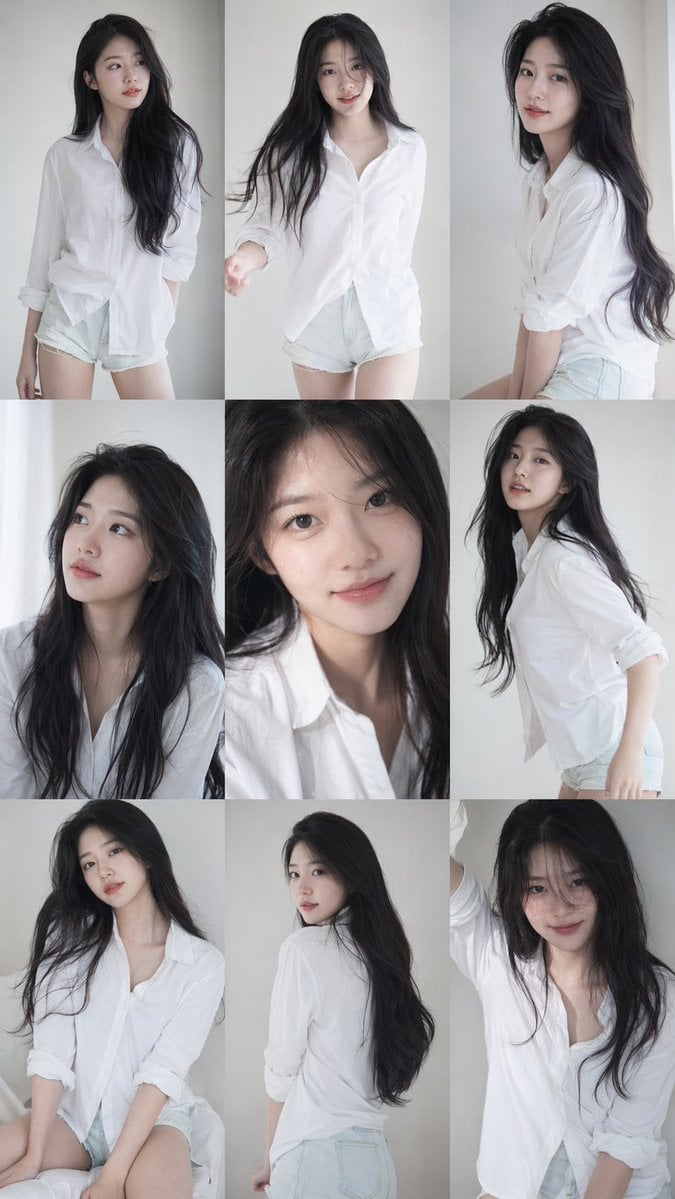
Image template
Featured
K-Pop Idol Nine-Panel Portrait Grid
No ratings yet
Portrait Photography
Realistic Photography
Cinematic
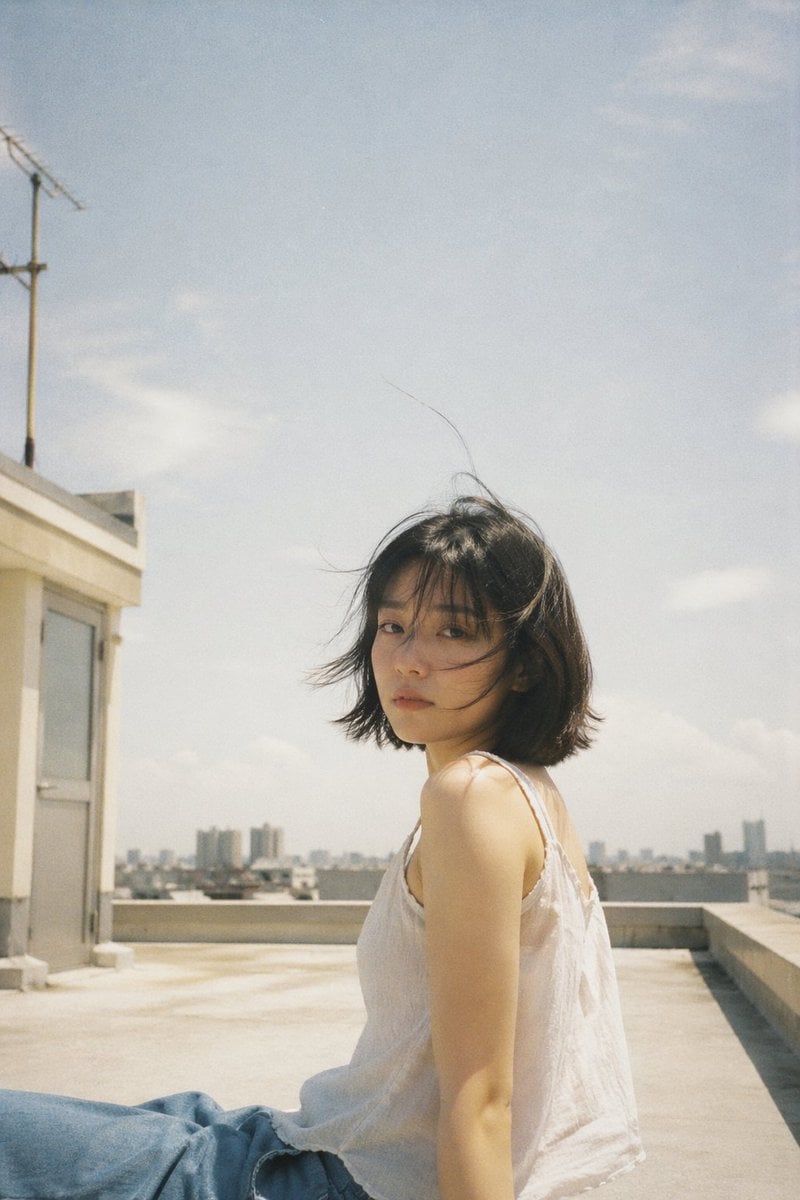
Image template
Featured
Japanese Negative-Film Rooftop Summer Portrait
No ratings yet
Portrait Photography
Realistic Photography
Cinematic
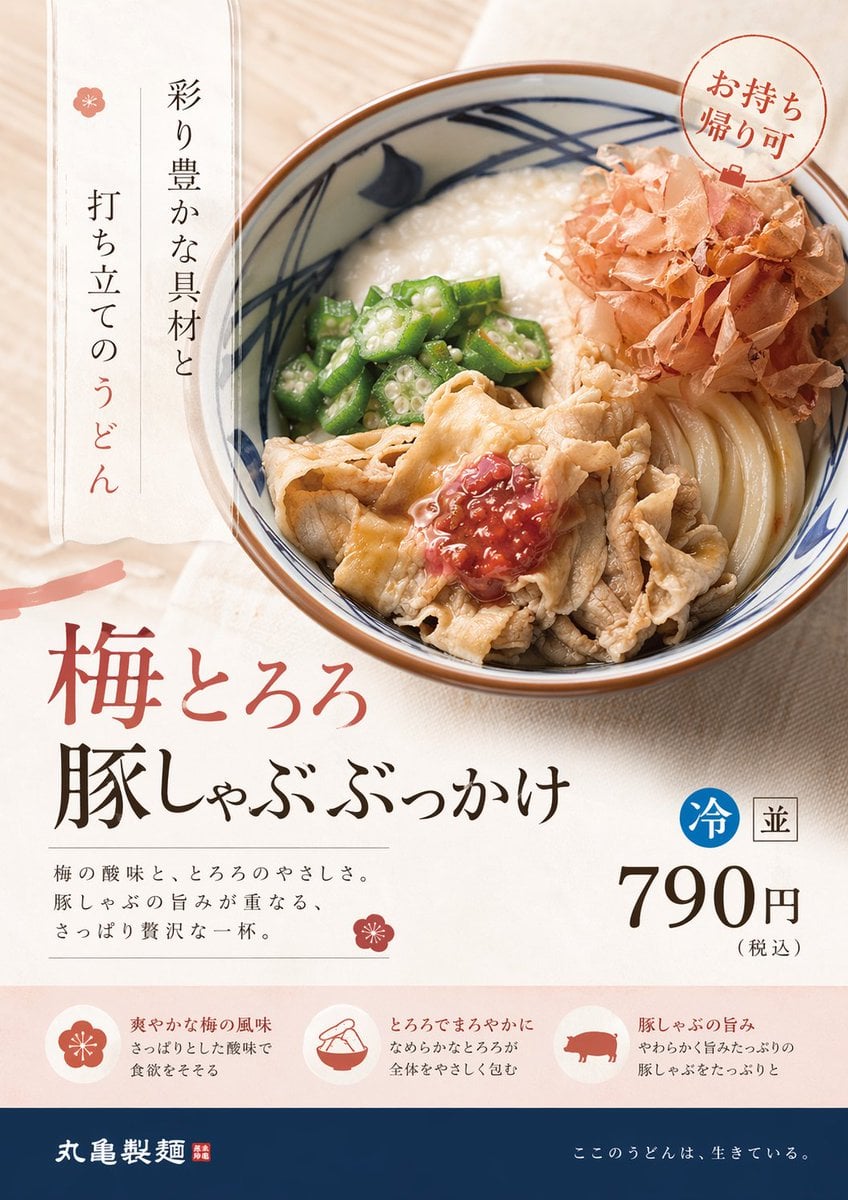
Image template
Featured
On-Trend Product Advertisement Redesign
No ratings yet
Ecommerce Product Images
Food
Drink
Ratings and feedback
No ratings yet
Please sign in first