Image template
Free to view, copy, and apply; generation uses credits
Featured
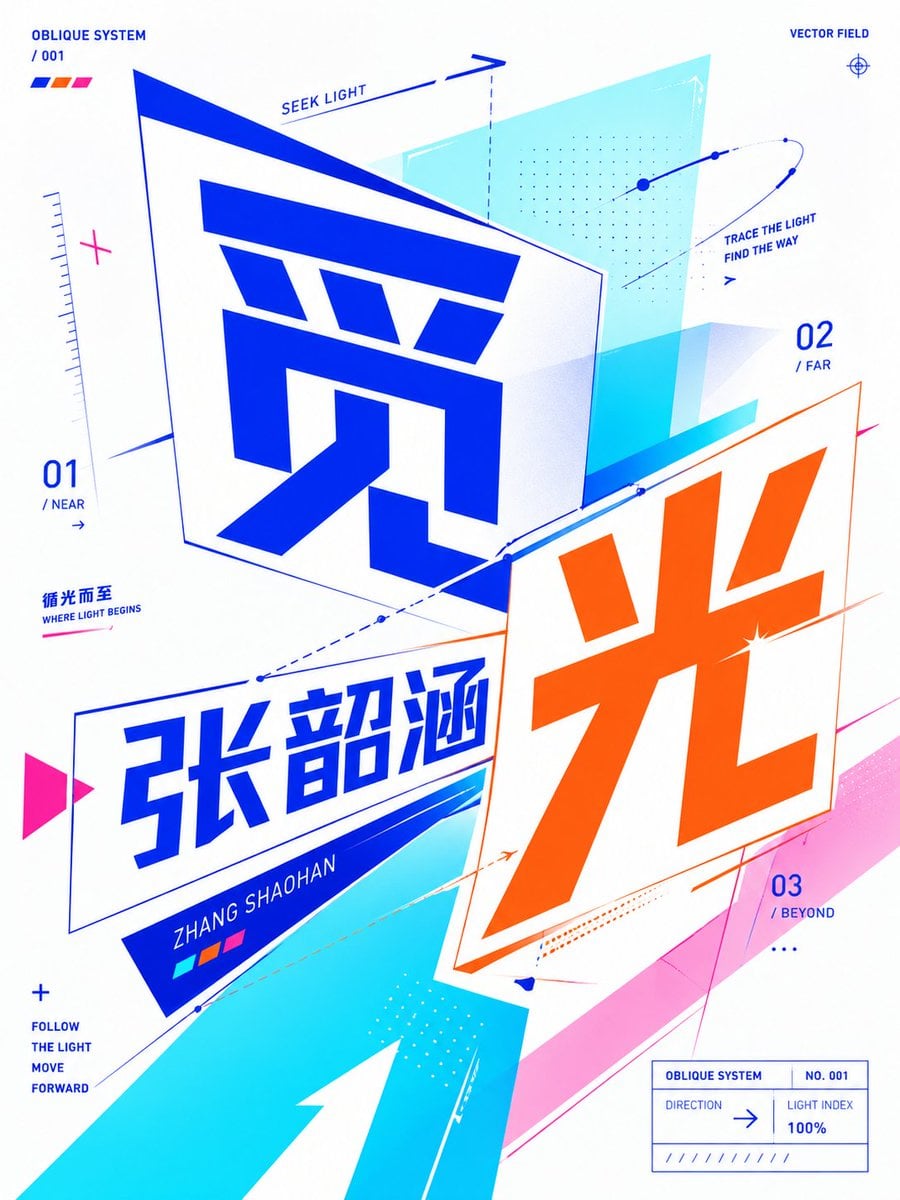
[THEME TEXT] Oblique Perspective Typography Poster
Start with the recommended models, use cases, and steps, then decide how to apply the template directly.
Official template0 views
Infographics and Diagrams
Posters and Covers
Infographic
Typography Layout
Logo Inspiration
Social Post
Minimal
White-background Product Image
Template type
Image template
Usage access
Free to view, copy, and apply; generation uses credits
Created
06/15/2026
Rating
No ratings yet
Template overview
These templates work best when you keep the visual structure, then replace the subject, style, or commercial goal. Start with Ideogram V3, then switch to a similar alternative based on the result.
Recommended models
If you are unsure which model to use first, start with one of the author's recommendations.
Ideogram V3
GPT Image 2
GPT Image 1.5
Prompt
Start with the recommended models, use cases, and steps, then decide how to apply the template directly.
Create a highly finished “Oblique Planar Perspective Typographic Poster” from the user's core text, word, phrase, short sentence, or letterform. Preserve these input fields: User input: [THEME TEXT]; Text language: [CHINESE / ENGLISH / MIXED CHINESE AND ENGLISH]; Optional context: [____]; Optional mood: [____]; Optional excluded elements: [____]. Do not make an ordinary illustration, an enlarged text effect, or a front-facing flat layout. Treat typography as the primary visual subject in a modern experimental poster. Use Oblique Planar Perspective Typography: organize the text across two-dimensional planes set at different angles, creating spatial direction through oblique guides, perspective compression, planar rotation, angular entry points, offset composition, vector cues, directional lines, translucent geometric planes, and modular color blocks. First interpret the literal meaning, emotion, cultural associations, psychological feeling, and semantic tension of [THEME TEXT], then choose an appropriate compositional logic. For emotional themes, use distance, center of gravity, negative space, lines, and module density to express pressure or release. For action themes, use angled forward motion, speed lines, directional arrows, perspective slices, and vector paths. For relational themes, use multiple text subjects and the intersection, opposition, enclosure, or cutting of geometric planes. For abstract themes, first extract a visual metaphor, then compose with oblique type, supporting vectors, occlusion, hierarchical offsets, repeated modules, and warped grids. The text may run horizontally or vertically and may be split, offset, grouped, reorganized, cropped, obscured, nested, angled, perspective-compressed, or rotated, but it must remain clearly legible. Give the visual language the bright, sharp clarity of modern graphic design. Build an angle system with oblique planar perspective typography and make a bold typographic composition the main image. Integrate experimental typography, flat vector aesthetics, a contemporary editorial-poster sensibility, a high-contrast graphic layout, and crisp vector-like precision across the type, color fields, and supporting annotations. Avoid realistic photography, retro covers, old Bauhaus posters, heavy texture, dark fine-art posters, and ordinary presentation-slide covers. Use a bright, luminous, high-contrast palette rather than a fixed blue-and-orange scheme. Derive two primary colors, one or two vivid accent colors, and a whitespace or structural-anchor color from the theme's meaning. Possible directions include fluorescent green with magenta and cool white; bright yellow with violet and black; lime green with deep purple and cyan; or rose pink with teal and silver white. Other options include cherry red with lake blue, mint cyan with bright red, fluorescent yellow with hot pink, coral orange with cyan, or a multicolor digital collage. Every result must establish its own memorable palette. The composition should include one core headline, one oblique perspective typographic-plane system, one geometric vector and color-block structure, and a small amount of supporting annotation, dot-and-line symbols, numbering, English keywords, minimalist subheads, or short conceptual phrases. Use geometric sans serif, modern display type, narrow elongated forms, bold grotesk, condensed sans, geometric sans, or editorial sans. Local stretching, compression, shearing, perspective deformation, and sliced offsets are allowed, but do not use true 3D extrusion, heavy drop shadows, metallic type, glass type, or embossed lettering. Optional devices include oblique rectangles, tilted planar frames, triangular corner cuts, dot systems, arrows, path lines, supporting grids, perspective borders, directional vectors, dot-matrix modules, short data rules, color-block facets, translucent geometric slices, partial circular lines, sectional labels, and small index information. The final poster must feel modern, luminous, sharp, vivid, legible, and experimental without falling into a repeated blue-and-orange formula.
How to use it
Following this sequence usually produces a usable result faster than copying the prompt without a plan.
1
Start with a recommended model
If you do not have a preference, starting with Ideogram V3 is usually a reliable choice.
2
Keep the structure, replace the details
Preserve composition, lighting, materials, and style, then replace the subject, brand information, and use case.
3
Compare at least 2 or 3 results
Image templates are most valuable when they speed up iteration, so do not judge the direction from a single result.
Template details
Quickly decide whether this template fits your current task.
Template type
Image template
Usage access
Free to view, copy, and apply; generation uses credits
Created
06/15/2026
Rating
No ratings yet
Best for
This template works especially well for the following tasks.
Posters and covers
Useful for event graphics, social covers, campaign posters, and key visuals.
Product and brand images
Useful for ecommerce main images, brand visuals, and product variations.
Character and style exploration
Create samples for characters, illustrations, scenes, and style directions.
Recommended models
If you are unsure which model to use first, start with one of the author's recommendations.
Ideogram V3
IMAGE
These templates work best when you keep the visual structure, then replace the subject, style, or commercial goal. Start with Ideogram V3, then switch to a similar alternative based on the result.
GPT Image 2
IMAGE
These templates work best when you keep the visual structure, then replace the subject, style, or commercial goal. Start with Ideogram V3, then switch to a similar alternative based on the result.
GPT Image 1.5
IMAGE
These templates work best when you keep the visual structure, then replace the subject, style, or commercial goal. Start with Ideogram V3, then switch to a similar alternative based on the result.
Related templates
Compare templates of the same type to find the prompt direction that fits you best.
Image template
Featured
K-Pop Idol Nine-Panel Portrait Grid
No ratings yet
Portrait Photography
Realistic Photography
Cinematic

Image template
Featured
Japanese Negative-Film Rooftop Summer Portrait
No ratings yet
Portrait Photography
Realistic Photography
Cinematic
Image template
Featured
On-Trend Product Advertisement Redesign
No ratings yet
Ecommerce Product Images
Food
Drink
Ratings and feedback
No ratings yet
Please sign in first