Image template
Free to view, copy, and apply; generation uses credits
Featured
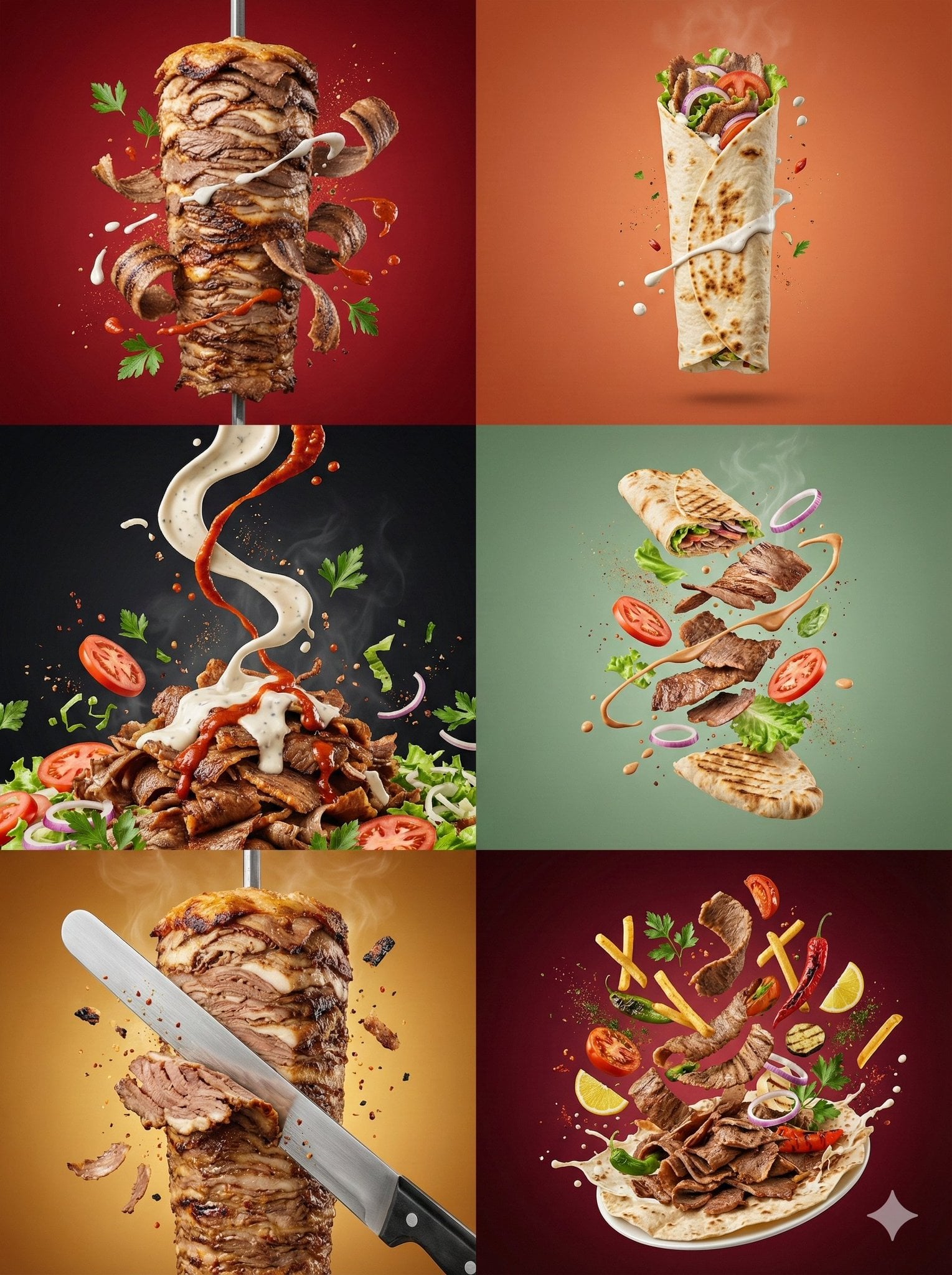
Six-Module Döner High-Speed Commercial Photography
Start with the recommended models, use cases, and steps, then decide how to apply the template directly.
Official template0 views
Food and Drink
Ecommerce Product Images
Food
Drink
Menu Creative
Product Scene
Packaging Display
Macro
Template type
Image template
Usage access
Free to view, copy, and apply; generation uses credits
Created
06/15/2026
Rating
No ratings yet
Template overview
These templates work best when you keep the visual structure, then replace the subject, style, or commercial goal. Start with Google Imagen4, then switch to a similar alternative based on the result.
Recommended models
If you are unsure which model to use first, start with one of the author's recommendations.
Google Imagen4
Nano Banana 2
Nano Banana Pro
Prompt
Start with the recommended models, use cases, and steps, then decide how to apply the template directly.
Create hyper-realistic commercial food photography in 8K UHD and a 3:4 format. Apply ultra-high detail, razor-sharp focus, and premium street-food clarity throughout. Use lighting that emphasizes meat texture, char marks, and glistening sauce. Freeze midair elements with subtle, realistic gravity. Choose a solid or smooth-gradient background for each module. Give the camera work a high-speed photography look with shallow-to-medium depth of field, then finish with rich contrast, warm savory tones, natural shine, and appetizing color grading. Module 1 — classic_doner_slice_explosion: Build a dramatic vertical döner stack from traditional Turkish döner kebab slices, using a thinly sliced beef-and-lamb mix with char marks, glistening streaks of fat, and spice particles. Spiral döner slices outward while white garlic sauce and red chili sauce droplets splash through the air and parsley leaves float around them. Use a deep crimson-red background. Module 2 — minimal_doner_durum_floating: Present a premium döner dürüm with a perfectly wrapped cross-section. Cut a single dürüm in half and float both halves vertically, showing golden char marks on the lavash. Reveal layers of döner meat, lettuce, tomatoes, and onions, with an elegant drizzle of white garlic-yogurt sauce. Freeze spice particles, herb fragments, and sauce droplets in mid-fall against a warm terracotta-orange background. Module 3 — doner_sauce_pour_drama: Form a pile of freshly sliced döner meat with crisp edges and a tender interior. Pour thick, creamy garlic-yogurt sauce from above and weave in a thin stream of spicy red chili sauce. Add sliced tomatoes, chopped lettuce, thinly sliced onions, and fresh parsley sprigs, along with micro sauce splashes, floating spice particles, and subtle heat vapor. Use a dark charcoal-black background. Module 4 — modern_doner_deconstructed_composition: Layer toasted lavash pieces, individual döner slices, tomato slices, lettuce leaves, onion rings, and glossy sauce ribbons through the air so they connect visually. Add spice dust, sauce droplets, and minimal heat waves against a muted sage-green background. Module 5 — rotating_doner_spit_close_up: Show a vertical döner tower on a rotating spit, with seasoned meat layers, a charred outer crust, visible spices, fat marbling, and grill marks. Catch a large döner knife mid-slice as a fresh slice falls away, surrounded by floating meat shavings, crisp bits, and wisps of heat vapor. Use a rich golden-amber background. Module 6 — doner_plate_overhead_explosion: Use an overhead shot with pieces of lavash at the bottom and a central pile of döner slices. Burst the ingredients upward in a circular pattern: döner slices, French fries, grilled peppers and tomatoes, parsley and sumac, sauce droplets, and lemon wedges. Vary their height and airborne rotation against a deep burgundy-red vignette. Preserve this Negative prompt exactly: text, logos, branding, hands, people, utensils beyond döner knife, full plates visible, tables, restaurant interior, cartoon style, raw meat, excessive grease pooling, burnt or overcooked appearance, overexposure, artificial glow, low detail textures, unappetizing colors, plastic-looking food.
How to use it
Following this sequence usually produces a usable result faster than copying the prompt without a plan.
1
Start with a recommended model
If you do not have a preference, starting with Google Imagen4 is usually a reliable choice.
2
Keep the structure, replace the details
Preserve composition, lighting, materials, and style, then replace the subject, brand information, and use case.
3
Compare at least 2 or 3 results
Image templates are most valuable when they speed up iteration, so do not judge the direction from a single result.
Template details
Quickly decide whether this template fits your current task.
Template type
Image template
Usage access
Free to view, copy, and apply; generation uses credits
Created
06/15/2026
Rating
No ratings yet
Best for
This template works especially well for the following tasks.
Posters and covers
Useful for event graphics, social covers, campaign posters, and key visuals.
Product and brand images
Useful for ecommerce main images, brand visuals, and product variations.
Character and style exploration
Create samples for characters, illustrations, scenes, and style directions.
Recommended models
If you are unsure which model to use first, start with one of the author's recommendations.
Google Imagen4
IMAGE
These templates work best when you keep the visual structure, then replace the subject, style, or commercial goal. Start with Google Imagen4, then switch to a similar alternative based on the result.
Nano Banana 2
IMAGE
These templates work best when you keep the visual structure, then replace the subject, style, or commercial goal. Start with Google Imagen4, then switch to a similar alternative based on the result.
Nano Banana Pro
IMAGE
These templates work best when you keep the visual structure, then replace the subject, style, or commercial goal. Start with Google Imagen4, then switch to a similar alternative based on the result.
Related templates
Compare templates of the same type to find the prompt direction that fits you best.
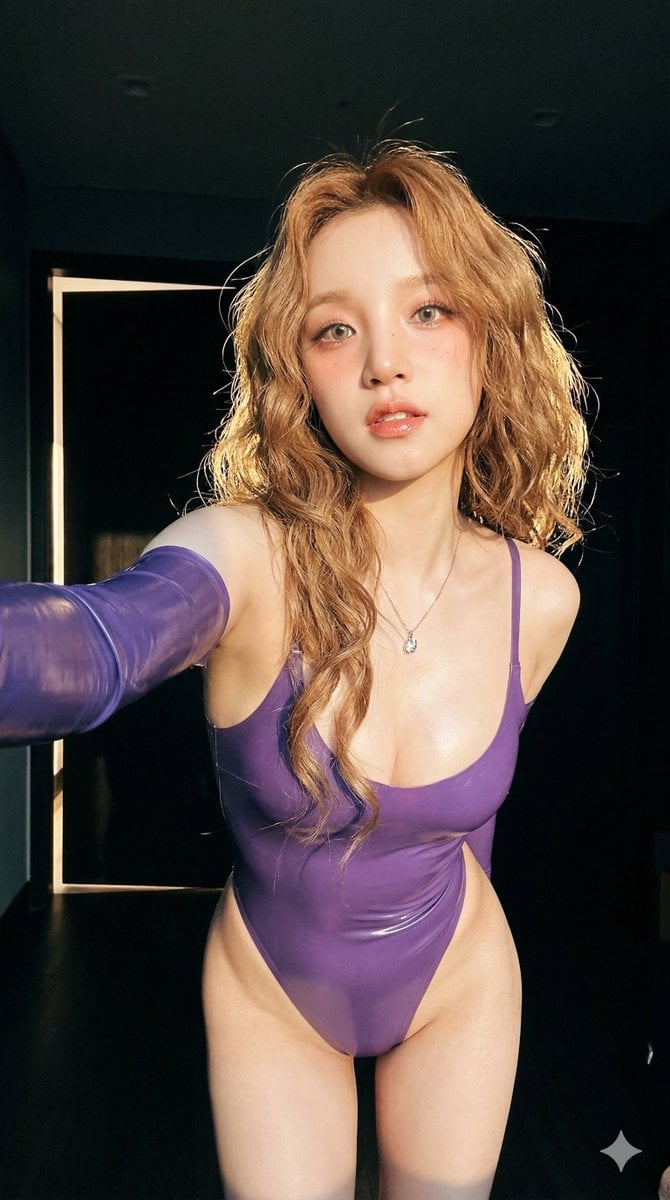
Image template
Featured
(G)I-DLE Yuqi Golden-Light Fashion Selfie
No ratings yet
Scene Photography
Realistic Photography
Cinematic
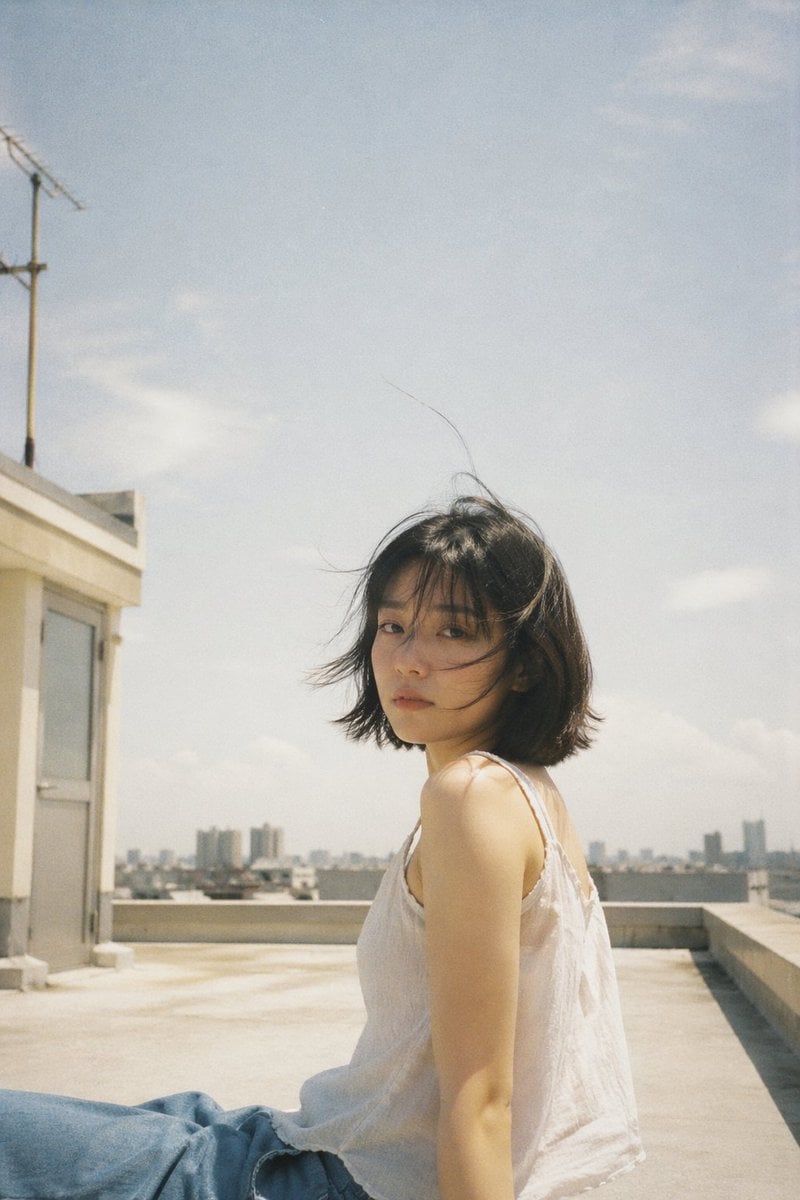
Image template
Featured
Japanese Negative-Film Rooftop Summer Portrait
No ratings yet
Portrait Photography
Realistic Photography
Cinematic
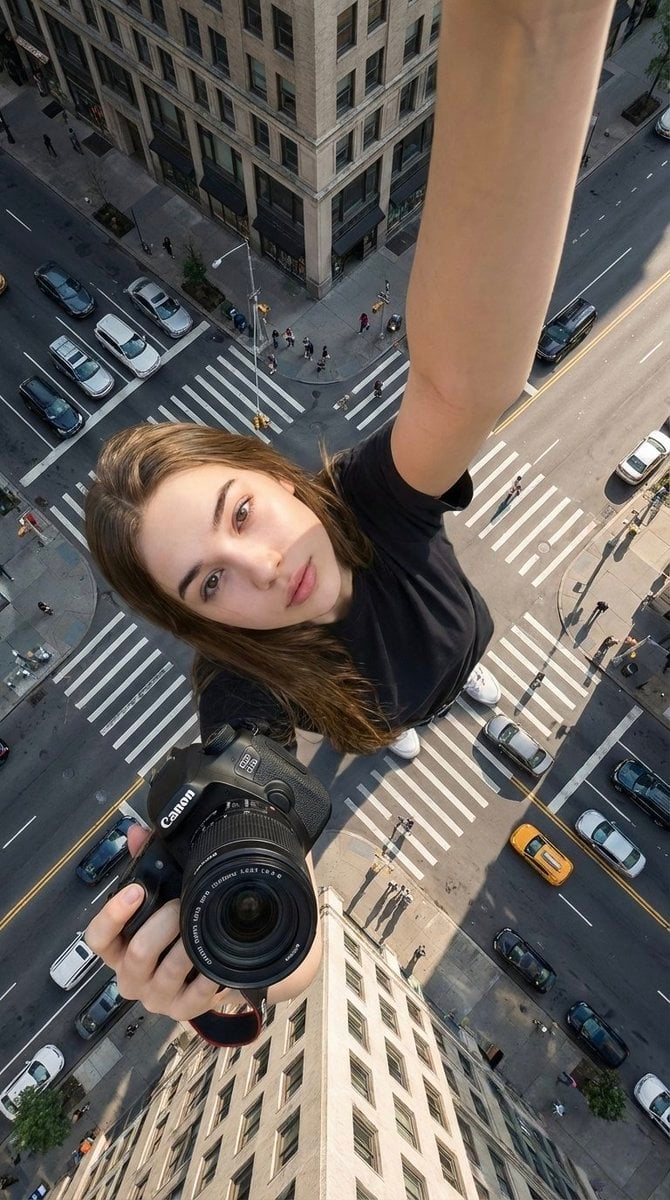
Image template
Featured
Canon Product Giant Selfie
No ratings yet
Portrait Photography
Realistic Photography
Cinematic
Ratings and feedback
No ratings yet
Please sign in first